For most climbers, summiting one of the world’s 8,000-meter peaks would be a once-in-a-lifetime achievement.
For Nima Rinji Sherpa, it was the beginning of something much bigger.
In October 2024, at just 18 years old, the Nepali mountaineer became the youngest person to summit all 14 of the world’s mountains above 8,000 meters. He completed the extraordinary journey on Shishapangma, finishing a project that had begun just two years earlier on Manaslu.
Now, Nima is taking on a different kind of challenge.
The Seven Summits.
In June 2026, he reached the summit of Denali in Alaska, adding North America’s highest mountain to a climbing résumé that already included Everest and Aconcagua. The June 19 ascent marked another major step in his pursuit of the highest peaks on all seven continents.
The remarkable part isn’t simply that Nima is climbing more mountains.
It’s that after completing one of mountaineering’s most demanding records, he has chosen to start an entirely different journey.
From 14 Eight-Thousanders to Seven Continents
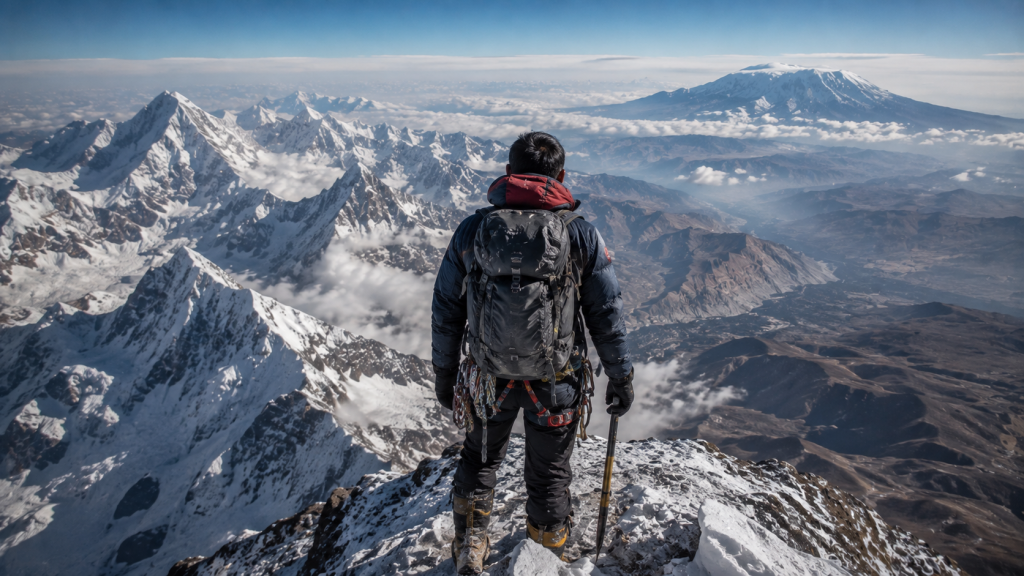
Nima began his high-altitude climbing career at 16, when he summited Manaslu in September 2022.
Over the following two years, his progress was extraordinary.
He climbed Everest and Lhotse in 2023, followed by K2, Nanga Parbat, Broad Peak, Gasherbrum I and Gasherbrum II. In 2024, the list continued with Annapurna, Makalu, Kangchenjunga, Dhaulagiri, Cho Oyu and finally Shishapangma.
When he reached the summit of Shishapangma on October 9, 2024, Nima became the youngest person to complete all 14 eight-thousanders.
He was only 18 years, five months and 21 days old.
But the Seven Summits are a completely different objective.
Rather than focusing on the highest mountains in one geographic region, the challenge is to climb the highest mountain on each of the world’s seven continents.
That means moving from the Himalayas and Karakoram to Alaska, South America, Africa, Europe, Oceania and Antarctica.
And each mountain brings its own environment and its own demands.
Denali: A Different Kind of Mountain
On June 19, 2026, Nima reached the summit of Denali.
At 6,190 meters, Denali is significantly lower than Everest. But mountain difficulty cannot be measured by elevation alone.
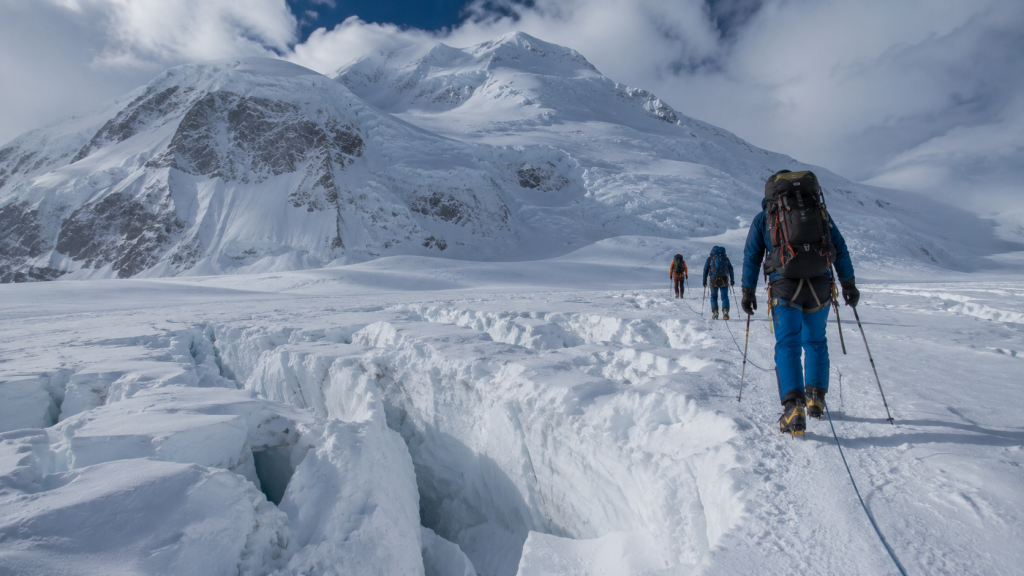
Denali is North America’s highest peak and presents a very different style of expedition from the Himalayan giants Nima has already climbed. The mountain involves glacier travel, crevasses, extreme cold, heavy loads and demanding expedition logistics.
Nima climbed Denali alongside his father, Tashi Lakpa Sherpa, his uncle Pasang Phurba Sherpa and the rest of their expedition team.
The ascent adds an important new dimension to Nima’s climbing experience.
He has already demonstrated that he can operate in the extreme altitude of the Himalayas.
Now he is taking on the cold, glaciers and expedition-style challenges of Alaska.
That versatility is at the heart of the Seven Summits.
The Seven Summits Are Seven Different Experiences
The Seven Summits are often described as a single mountaineering goal.
In reality, they are seven very different mountain experiences.
Africa — Mount Kilimanjaro
At 5,895 meters, Mount Kilimanjaro is the highest mountain in Africa.
Unlike several other Seven Summits, Kilimanjaro does not require technical mountaineering on its standard trekking routes.
The primary challenge is altitude.
Success depends heavily on pacing, acclimatization and allowing the body enough time to adjust to decreasing oxygen levels.
For many climbers beginning a Seven Summits journey, Kilimanjaro offers an introduction to high-altitude trekking.
Asia — Mount Everest
At 8,849 meters, Everest is the highest mountain on Earth.
Nima has already stood on its summit, reaching the top in May 2023.
But Everest is only one part of his new Seven Summits journey.
Europe — Mount Elbrus
Mount Elbrus rises to 5,642 meters in the Caucasus Mountains.
Its terrain and conditions are very different from Kilimanjaro. Snow, ice, cold temperatures and changing mountain weather introduce another set of challenges.
Elbrus is expected to be part of Nima’s next stages in his Seven Summits pursuit.
North America — Denali
Denali is now checked off Nima’s list.
At 6,190 meters, it is the highest mountain in North America.
But its significance goes beyond its elevation.
Glacier travel, crevasse hazards, cold temperatures and expedition logistics make Denali one of the most demanding mountains on the Seven Summits list.
South America — Aconcagua
At 6,961 meters, Aconcagua is the highest mountain outside Asia.
Nima has already climbed Aconcagua, meaning his Seven Summits journey now includes another major high-altitude expedition outside the Himalayas.
Oceania — Carstensz Pyramid
Carstensz Pyramid, also known as Puncak Jaya, is one of the most unusual mountains on the Seven Summits.
Its relatively modest elevation compared with Everest doesn’t tell the whole story.
The mountain is known for technical rock climbing and exposed terrain, making it a very different challenge from the high-altitude trekking environments of Kilimanjaro or Aconcagua.
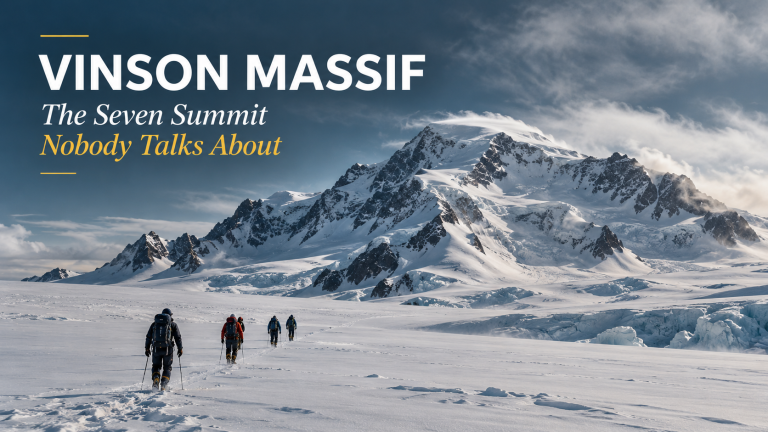
Antarctica — Mount Vinson
At 4,892 meters, Mount Vinson is the highest mountain in Antarctica.
Its challenge comes not only from the climbing itself but also from the remote Antarctic environment.
Extreme cold, isolation and complicated logistics make reaching the mountain an expedition in every sense of the word.
Why Nima’s Journey Is So Interesting
Nima’s Seven Summits journey is compelling because it demonstrates that mountaineering isn’t simply about climbing higher.
It’s about learning how to adapt.
A climber who has mastered the thin air of the Himalayas still has to learn the realities of Alaska.
Someone experienced with glaciers may need to develop different technical skills for Carstensz Pyramid.
A climber accustomed to crowded high-altitude routes may suddenly find themselves operating in the immense isolation of Antarctica.
Every mountain asks a different question.
And the climber has to find a different answer.
The Next Chapter
Nima Rinji Sherpa has already achieved what most climbers can only dream about.
He became the youngest person to climb all 14 of the world’s 8,000-meter peaks.
Yet instead of treating that record as the end of his mountaineering story, he has chosen another challenge.
Denali is now behind him.
Everest and Aconcagua are already part of the journey.
Kilimanjaro and Elbrus are planned for later in 2026, according to reporting on his Seven Summits project.
The journey continues across continents, climates and completely different mountain environments.
And perhaps that is what makes the Seven Summits so appealing.
The goal isn’t simply to reach seven summits.
It’s to experience seven different worlds.
More Than a List of Mountains
The Seven Summits can look like a checklist:
Kilimanjaro.
Elbrus.
Aconcagua.
Denali.
Carstensz Pyramid.
Vinson.
Everest.
But behind every name is a different expedition, a different environment and a different lesson.
Nima Rinji Sherpa’s journey is a powerful example.
After climbing all 14 eight-thousanders, he could have stopped.
Instead, he looked toward another horizon.
His story reminds us that in mountaineering, one summit can mark the end of one journey while opening the door to another.
Seven mountains. Seven continents. One extraordinary journey.