If you are working toward the Seven Summits, there is one decision that can create more confusion than almost any other: Carstensz Pyramid or Mount Kosciuszko?
Both mountains are associated with the Australia/Oceania slot on different Seven Summits lists, but they offer dramatically different experiences. One involves technical climbing in a remote mountain environment. The other is a straightforward hiking objective on Australia’s highest mountain.
So, which version is right for you?
The answer depends on what you want the Seven Summits to represent: a broader mountaineering challenge, a more accessible hiking experience, or a specific list and completion standard.
Why Are There Two Seven Summits Options?
The confusion comes from the different definitions of the continent of Australia and Oceania used by Seven Summits lists.
Mount Kosciuszko, at 2,228 meters (7,310 feet), is the highest mountain on the Australian mainland. It is located in Australia’s Snowy Mountains and can be reached by a well-established hiking route.
Carstensz Pyramid, also known as Puncak Jaya, rises to approximately 4,884 meters (16,024 feet) on the island of New Guinea. It is the highest mountain in the country of Indonesia and is generally treated as the Oceania representative on lists that use a broader geographic definition of the continent.
This creates two recognized approaches to completing the Seven Summits.
The Bass list traditionally uses Carstensz Pyramid, while the Messner list uses Kosciuszko for the Australia/Oceania position.
That distinction matters if you are pursuing an official Seven Summits record.
Mount Kosciuszko: The More Accessible Option
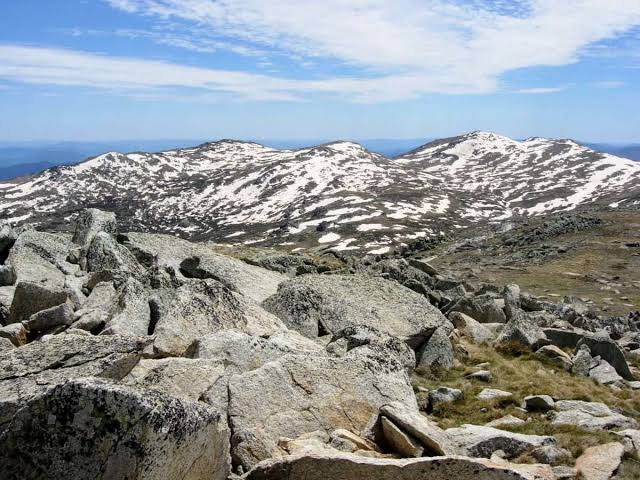
For climbers primarily interested in completing a Seven Summits version with a relatively accessible final peak, Kosciuszko is a very different proposition from Carstensz Pyramid.
The summit is reached by hiking rather than technical mountaineering. The route is well established, and the mountain’s lower elevation means altitude is not the primary challenge.
For many people, the appeal is exactly that simplicity.
A Kosciuszko expedition can be incorporated into a broader trip through southeastern Australia, with access to the Snowy Mountains and established visitor infrastructure.
What Makes Kosciuszko Appealing?
Kosciuszko may suit someone who:
- Wants a hiking-focused Seven Summits experience
- Does not want to add technical rock climbing to their objective
- Prefers established trails and relatively straightforward logistics
- Wants to combine a mountain objective with travel through Australia
- Is following a Seven Summits list that recognizes Kosciuszko
The physical demands should still be taken seriously. Weather in the Snowy Mountains can change quickly, and mountain conditions can make an otherwise straightforward hike more demanding.
But compared with Carstensz Pyramid, the technical difference is substantial.
Carstensz Pyramid: A True Mountaineering Challenge
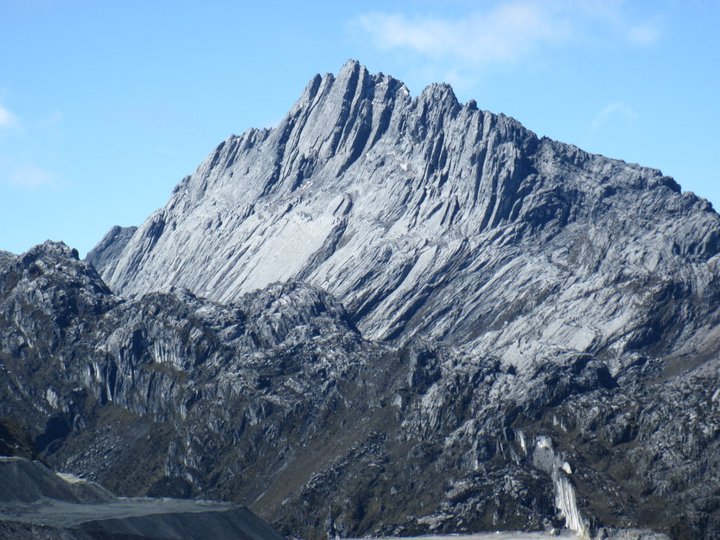
Carstensz Pyramid is a completely different kind of objective.
The mountain combines altitude, remote logistics, rugged terrain and technical climbing. The summit route involves exposed rock climbing, rappelling and rope work, making prior climbing experience and appropriate technical preparation important considerations.
The environment also contributes significantly to the challenge.
Carstensz Pyramid is located in the highlands of Papua, where access can be complicated and conditions can be unpredictable. Reaching the mountain is part of the expedition itself.
For a Seven Summits climber, that is also what makes Carstensz Pyramid so significant.
It is not simply another high-altitude hike. It introduces a technical climbing component that is largely absent from the Kosciuszko experience.
What Makes Carstensz Pyramid Appealing?
Carstensz Pyramid may appeal to someone who:
- Wants the more technical Australia/Oceania objective
- Is interested in expanding their mountaineering experience
- Enjoys remote expedition-style climbing
- Has, or is willing to develop, technical climbing skills
- Is pursuing a Seven Summits list that includes Carstensz Pyramid
If your goal is to experience a wider range of mountaineering disciplines during your Seven Summits journey, Carstensz adds an entirely different skill set.
Carstensz Pyramid vs. Kosciuszko: At a Glance
| Carstensz Pyramid | Mount Kosciuszko | |
|---|---|---|
| Elevation | Approx. 4,884 m / 16,024 ft | 2,228 m / 7,310 ft |
| Location | New Guinea, Indonesia | New South Wales, Australia |
| Style | Technical mountaineering | Hiking |
| Technical climbing | Required | Not generally required |
| Altitude challenge | Significant | Relatively low |
| Logistics | Remote and complex | More established |
| Terrain | Rock, exposed sections, rugged mountain terrain | Established mountain trail |
| Seven Summits lists | Bass-style | Messner-style |
| Overall experience | Expedition-style | Trekking/hiking-focused |
The table highlights the biggest difference: these are not two versions of the same climb.
They represent two substantially different mountain experiences.
Which Mountain Should You Choose?
Start with the question: Which Seven Summits list are you following?
If you are working toward a specific registry, organization or completion standard, confirm its requirements before choosing your Australia/Oceania peak. Your choice can affect whether your completed summits satisfy that organization’s definition.
Next, consider your experience.
If you are comfortable with technical climbing, rope systems and exposed terrain—or want to build those skills—Carstensz Pyramid may be the more natural fit.
If your Seven Summits journey is primarily about reaching the highest points through hiking and trekking, Kosciuszko offers a considerably different path.
There is also nothing inherently wrong with doing both.
For some mountaineers, completing Kosciuszko and later climbing Carstensz Pyramid provides the opportunity to experience both sides of the debate rather than treating them as competing objectives.
Don’t Choose Based on Elevation Alone
One of the easiest mistakes is assuming that the higher mountain must automatically be the harder one.
Carstensz Pyramid is more than twice the elevation of Kosciuszko, but elevation alone does not determine climbing difficulty.
Technical terrain, exposure, weather, remoteness, route-finding and logistics can dramatically change an expedition.
This is an important lesson throughout the Seven Summits: mountain difficulty cannot be measured by elevation alone.
A lower mountain can require more specialized skills, while a higher mountain can involve primarily trekking.
What Does This Mean for Your Seven Summits Journey?
The Carstensz Pyramid versus Kosciuszko question ultimately comes down to the kind of mountaineer you want to be—and the Seven Summits standard you are pursuing.
Kosciuszko represents accessibility, hiking and a comparatively straightforward mountain experience.
Carstensz Pyramid represents technical climbing, remote expedition logistics and a significant expansion of the skills required on your Seven Summits journey.
Neither choice tells the entire story of your mountaineering experience. What matters is understanding the requirements before you commit to your list and your expedition plan.
If Carstensz is on your itinerary, preparation should go beyond cardiovascular fitness. Technical climbing ability, rope skills and comfort with exposed terrain become important parts of getting ready.
And if you are still building your Seven Summits plan, understanding how each peak fits into the bigger journey can help you prepare for the very different demands that come with climbing around the world.
The Seven Summits are not simply seven elevations to check off a list. Each mountain introduces a different environment, different skills and a different kind of challenge. The Australia/Oceania choice is one of the clearest examples of why the definition of your goal matters just as much as the summit itself.
FAQ
Is Carstensz Pyramid harder than Kosciuszko?
They are fundamentally different objectives. Carstensz Pyramid involves technical mountaineering and remote expedition logistics, while Kosciuszko is primarily a hiking objective.
Why do some Seven Summits climbers climb Carstensz instead of Kosciuszko?
Carstensz Pyramid is used by the Bass approach to the Seven Summits, while Kosciuszko is used by the Messner approach.
Can you climb both Carstensz Pyramid and Kosciuszko?
Yes. Climbers can choose to complete both mountains, although only one may count toward a particular Seven Summits list.
Do you need climbing experience for Carstensz Pyramid?
Carstensz is a technical mountain, so appropriate climbing skills and preparation are important. It should not be approached like a standard hiking peak.
Which mountain is higher?
Carstensz Pyramid is substantially higher, at approximately 4,884 meters, compared with Kosciuszko at 2,228 meters.