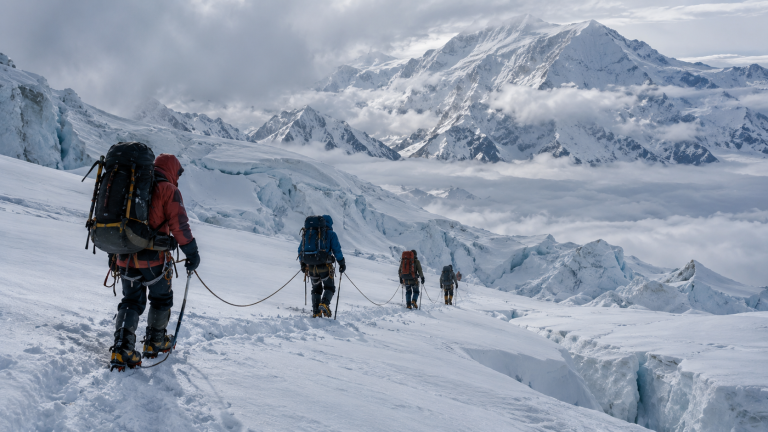
At 6,961 meters (22,838 feet), Aconcagua rises above the Andes of western Argentina as the highest mountain outside Asia. For climbers pursuing the Seven Summits, it is a major milestone. Yet the challenge is not simply reaching a high elevation. It is understanding the mountain’s camp system, securing the correct climbing permit, managing altitude, and knowing when the weather makes continuing too dangerous.
One term deserves particular attention: Viento Blanco. Literally translated as “white wind,” the expression is associated with the severe winds and snow conditions that can create whiteout-like situations in the Andes. On Aconcagua, strong winds can turn an otherwise manageable ascent into a serious test of judgment and preparation.
Successful planning starts well before summit day. Climbers need to understand where they will sleep, how they will move between camps, which permits and services are required, and how their team will respond when conditions change.
Here is what to know before planning an Aconcagua expedition.
Understanding Aconcagua’s Climbing Routes
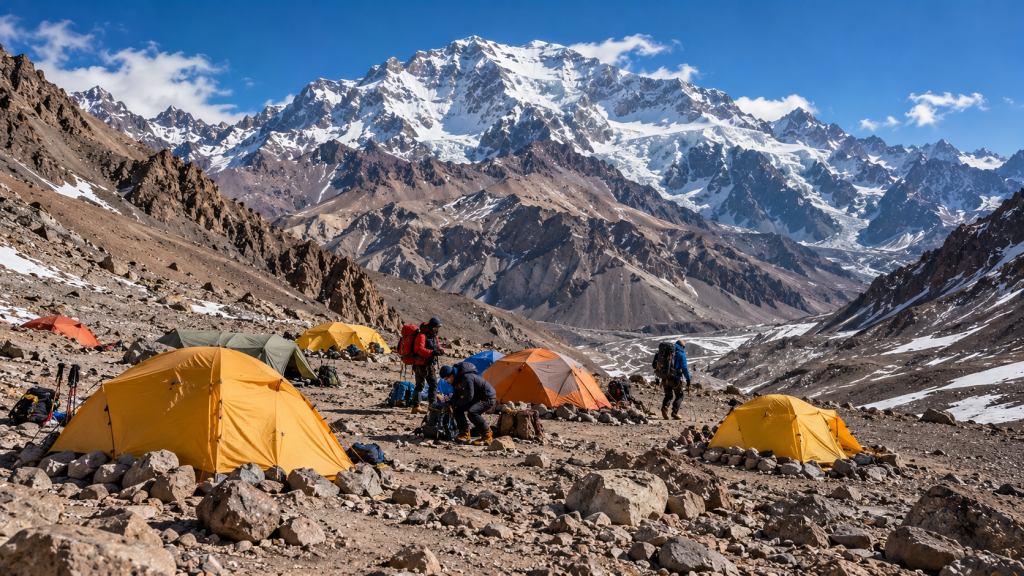
Aconcagua offers several routes, but two major approaches are commonly used for standard climbing expeditions: the Normal Route via Horcones and the Polish Traverse approach via the Vacas Valley.
The Normal Route via Horcones
The Normal Route is the most frequently used route to Aconcagua’s summit. It approaches the mountain through Horcones Valley and typically establishes base camp at Plaza de Mulas before moving to higher camps.
Although it does not involve the technical climbing generally associated with steep alpine faces, the Normal Route is not an easy hike. High altitude, cold temperatures, exposure, heavy loads, and strong winds make the ascent physically demanding.
Climbers still need appropriate mountaineering equipment, acclimatization time, and the ability to make conservative decisions.
The Vacas Valley and Polish Traverse approach
The Vacas Valley approach begins from a different access point and generally leads to Plaza Argentina, another major base camp. Some itineraries continue toward the Polish Glacier area, while others connect with routes leading toward the Normal Route’s upper mountain.
The precise route, camp sequence, and technical requirements depend on the expedition plan. Climbers should confirm the itinerary with their guide or expedition provider before departure.
Both approaches demand careful logistics and respect for the mountain’s conditions.
Aconcagua Camps: From Base Camp to the Summit
Aconcagua’s camps are more than places to sleep. They provide staging points for acclimatization, equipment management, and the gradual movement of climbers toward the summit.
On the Normal Route, the commonly used progression includes Plaza de Mulas, Camp 1, Nido de Cóndores, and a higher camp near Berlin or Cólera. Exact camp choices vary with the itinerary, weather, and the condition of the team.
Plaza de Mulas: The main base camp
At approximately 4,300 meters, Plaza de Mulas serves as the main base camp on the Normal Route.
This is where climbers can rest, organize equipment, monitor their response to altitude, and prepare for carrying loads to higher camps. Depending on the service arrangement, expedition providers may supply meals, tents, sanitation facilities, and logistical support.
Plaza de Mulas is also a critical decision point. A climber who is struggling with altitude or recovering poorly should not assume that the schedule must continue unchanged.
Camp 1: Plaza Canadá or Cambio de Pendiente
Above base camp, itineraries commonly establish an intermediate camp in the area of Plaza Canadá, around 4,900 meters, or Cambio de Pendiente, around 5,200 meters.
The exact location depends on the expedition’s strategy and current conditions. Climbers may carry equipment and supplies upward before returning to base camp, helping prepare for a later move to a higher sleeping altitude.
This stage increases the physical demands of the expedition. Every load carried uphill requires additional effort in an environment where the body has less available oxygen.
Nido de Cóndores: A higher camp
Nido de Cóndores, at approximately 5,350 meters, is a major high camp on the Normal Route.
At this elevation, the effects of altitude can become more pronounced. Sleep may be difficult, appetite may decrease, and ordinary movements can feel unusually demanding.
Climbers should monitor their symptoms, eat and drink regularly, and follow their guide’s acclimatization plan. Persistent or worsening symptoms require prompt medical assessment rather than simply pushing through.
Berlin, Cólera and other upper camps
Higher on the mountain, expedition plans may use the Berlin area, around 5,770 meters, or Cólera, around 5,950 meters. Other locations may be used depending on conditions and the chosen itinerary.
The upper camps provide access to the summit route, but they also expose climbers to colder temperatures, stronger winds, and a more demanding environment.
Moving higher is not automatically progress if the team is struggling to acclimatize or the forecast is deteriorating. A sound camp plan must remain flexible.
Aconcagua Climbing Permits: What You Need to Know
Aconcagua lies within Aconcagua Provincial Park in Mendoza Province, Argentina. Climbers must obtain the appropriate authorization for their planned activity and route.
The permit process is administered by the provincial authorities, and requirements can differ according to the activity, access route, services used, and visitor category.
The official Mendoza government Aconcagua page provides information about permits, regulations, park activities, and expedition requirements.
Choose the correct permit
A day visit, a multi-day trek, and a summit expedition do not use the same authorization.
For a climbing expedition, make sure the permit corresponds to your intended ascent, route, and dates. Do not assume that a trekking permit authorizes an attempt on the summit.
The provincial authorities may also distinguish between permits with assistance from authorized service providers and permits without that assistance.
Understand what your permit includes
A permit fee is not necessarily the same as the total cost of an expedition. Guide services, food, equipment transport, accommodation, and camp support may be charged separately.
Confirm what is included in your arrangement and which services you must organize yourself. Independent climbers should pay particular attention to sanitation requirements, evacuation arrangements, and the paperwork needed to collect their permit.
Arrange permits before entering the park
Do not leave the permit process until arrival at the mountain entrance. Official guidance states that the relevant tickets and permits must be arranged in advance; they are not issued at the park entrance.
Requirements and procedures can change between seasons. Check the current regulations and deadlines with the provincial authorities or an authorized local provider before traveling.
What Is the Viento Blanco on Aconcagua?
Viento Blanco is a Spanish expression meaning “white wind.” In high-mountain settings, it is associated with severe wind and snow conditions that can obscure the landscape and make navigation difficult.
On Aconcagua, strong winds are a defining hazard. They can affect balance, increase heat loss, make tent use difficult, and complicate movement over exposed terrain. When blowing snow and poor visibility accompany the wind, climbers may struggle to identify the route or judge nearby terrain.
A Viento Blanco situation should not be treated as an ordinary inconvenience that can be overcome by walking faster.
Why strong winds are so dangerous
Wind affects the expedition in several ways:
- Wind chill: Heat is lost more quickly, increasing the risk of cold injury and hypothermia.
- Reduced visibility: Blowing snow and cloud can make route-finding harder.
- Difficult movement: Gusts can affect balance and make exposed sections more hazardous.
- Camp disruption: Tents and equipment may be damaged or difficult to manage in severe conditions.
- Changing summit plans: A route that was reasonable in calm conditions may become unsafe when the wind strengthens.
A forecast is useful, but conditions can change quickly in mountainous terrain. Climbers should understand the forecast, communicate with their guides, and be prepared to wait or descend.
How should climbers prepare for Viento Blanco?
Preparation begins before the expedition. Appropriate wind-resistant outer layers, insulating clothing, eye protection, gloves, and secure equipment are essential.
Teams should also understand their navigation plan and agree on clear decision-making procedures. If visibility deteriorates or wind exceeds safe limits, the group may need to stop in a secure location, retreat, or abandon the summit attempt.
The most important preparation is the willingness to change the plan. A summit date is not more important than the safety of the team.
Acclimatization and Expedition Planning
Aconcagua’s altitude makes acclimatization a central part of the climb. Reaching a higher camp too quickly can increase the risk of altitude illness, even for fit and experienced mountaineers.
A well-designed itinerary allows time to adjust to elevation and may include carrying loads to a higher camp before returning to sleep lower. The appropriate schedule depends on the climber, route, and expedition conditions.
Pay attention to symptoms such as headache, nausea, dizziness, unusual fatigue, or worsening shortness of breath. Severe symptoms, confusion, difficulty walking, or breathlessness at rest require urgent medical assessment and may mean descending without delay.
Fitness helps you manage the physical workload, but it does not prevent altitude illness. A responsible expedition plan prioritizes health over schedule.
What to Pack for Aconcagua
Aconcagua requires equipment suited to cold, wind, high altitude, and potentially long periods between camps.
Essential categories include:
- Insulating layers and a windproof, waterproof outer shell
- High-altitude mountaineering boots and suitable socks
- Warm mittens or gloves, a hat, and face protection
- Sunglasses and glacier-rated eye protection
- A sleeping system suitable for expected temperatures
- A headlamp with spare batteries
- Navigation equipment and communication arrangements
- Personal medication, sun protection, and a first-aid kit
- Expedition food, water containers, and appropriate hydration equipment
The precise equipment list depends on the season, route, camp support, and weather forecast. Follow the requirements supplied by your expedition provider and test critical equipment before leaving home.
Respect the Mountain, Respect the Decision
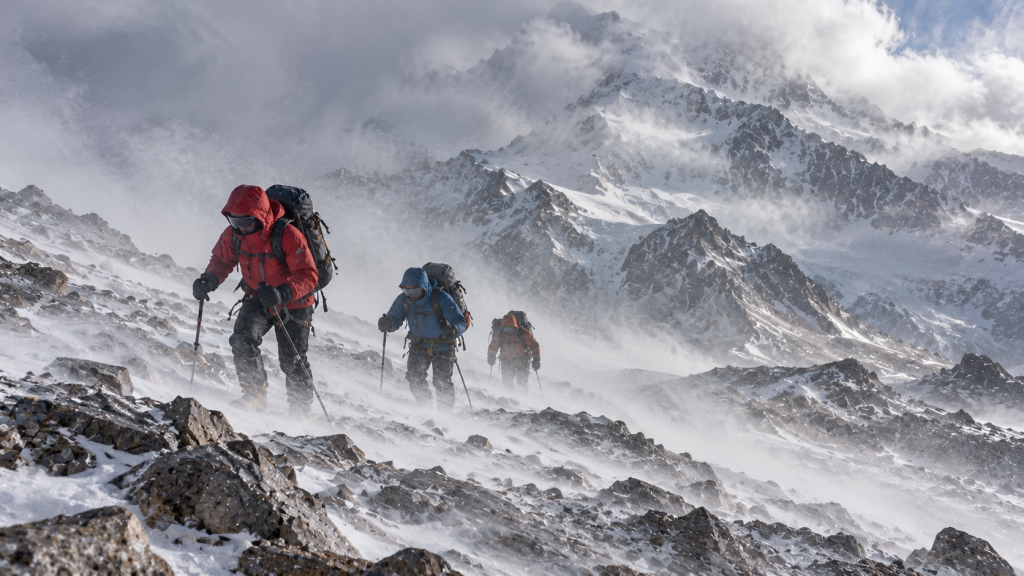
Aconcagua’s camps, permit system, and weather are closely connected. The permit defines the authorized activity, the camp plan shapes the expedition’s progression, and conditions such as Viento Blanco can determine whether the summit attempt should proceed.
Preparation means understanding all three.
For climbers pursuing the Seven Summits, Aconcagua offers a powerful lesson: ambition needs to be supported by planning, adaptability, and sound judgment. A well-executed expedition is not simply one that reaches the top. It is one in which climbers respect the mountain, support their team, and return safely.
The summit is the objective. Good decisions are what make the expedition possible.
Frequently Asked Questions About Aconcagua
How many camps are there on Aconcagua?
The number and location of camps depend on the route and expedition itinerary. On the Normal Route, common locations include Plaza de Mulas, an intermediate camp such as Plaza Canadá or Cambio de Pendiente, Nido de Cóndores, and an upper camp near Berlin or Cólera.
Do I need a permit to climb Aconcagua?
Yes. Climbers need the appropriate permit for their planned activity and route. Check the current requirements through the official Mendoza provincial government website before traveling.
What does Viento Blanco mean?
Viento Blanco means “white wind” in Spanish. In mountaineering contexts, it describes severe wind and snow conditions that can produce poor visibility and make travel more dangerous.
Is the Normal Route on Aconcagua technically difficult?
The Normal Route generally involves less technical climbing than Aconcagua’s steeper alpine routes, but it is still a serious high-altitude expedition. Weather, altitude, cold, and physical demands make appropriate preparation essential.
What is the highest camp on Aconcagua?
Camp locations vary between expeditions. Camps in the Berlin area and Cólera are among the upper camps used on the Normal Route, but the exact summit strategy depends on conditions and the itinerary.
Recommended Further Reading
For current regulations and planning information, consult the official Aconcagua Provincial Park website and verify route and camp details with a qualified local expedition provider.